Q&A: RAY BULL'S JOURNEY FROM MAKING ART TO DISCOVERING THEIR EXCITEMENT FOR MUSIC
May 11, 2026
Written by Iris Flynt
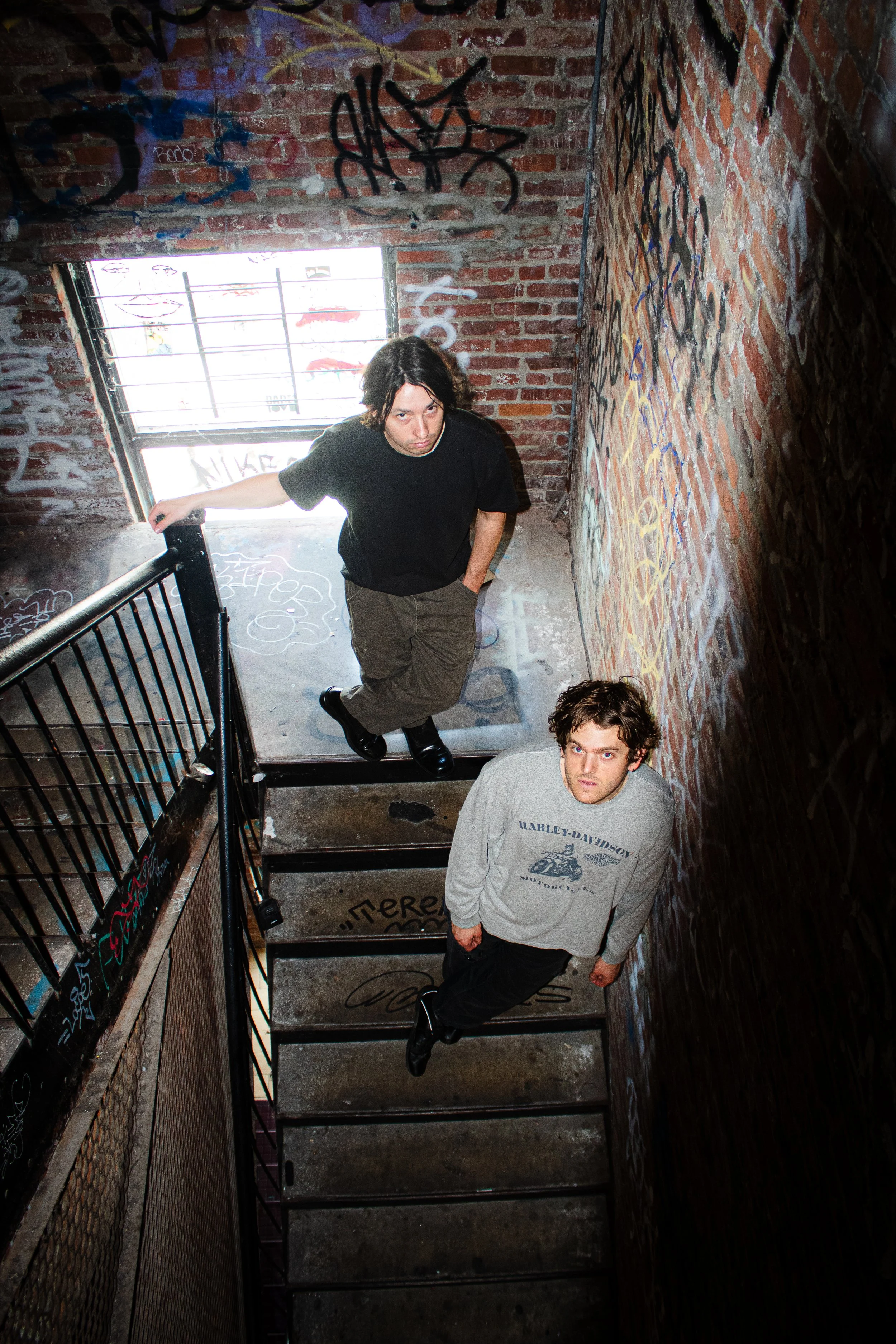
Photos by Isabella Appell
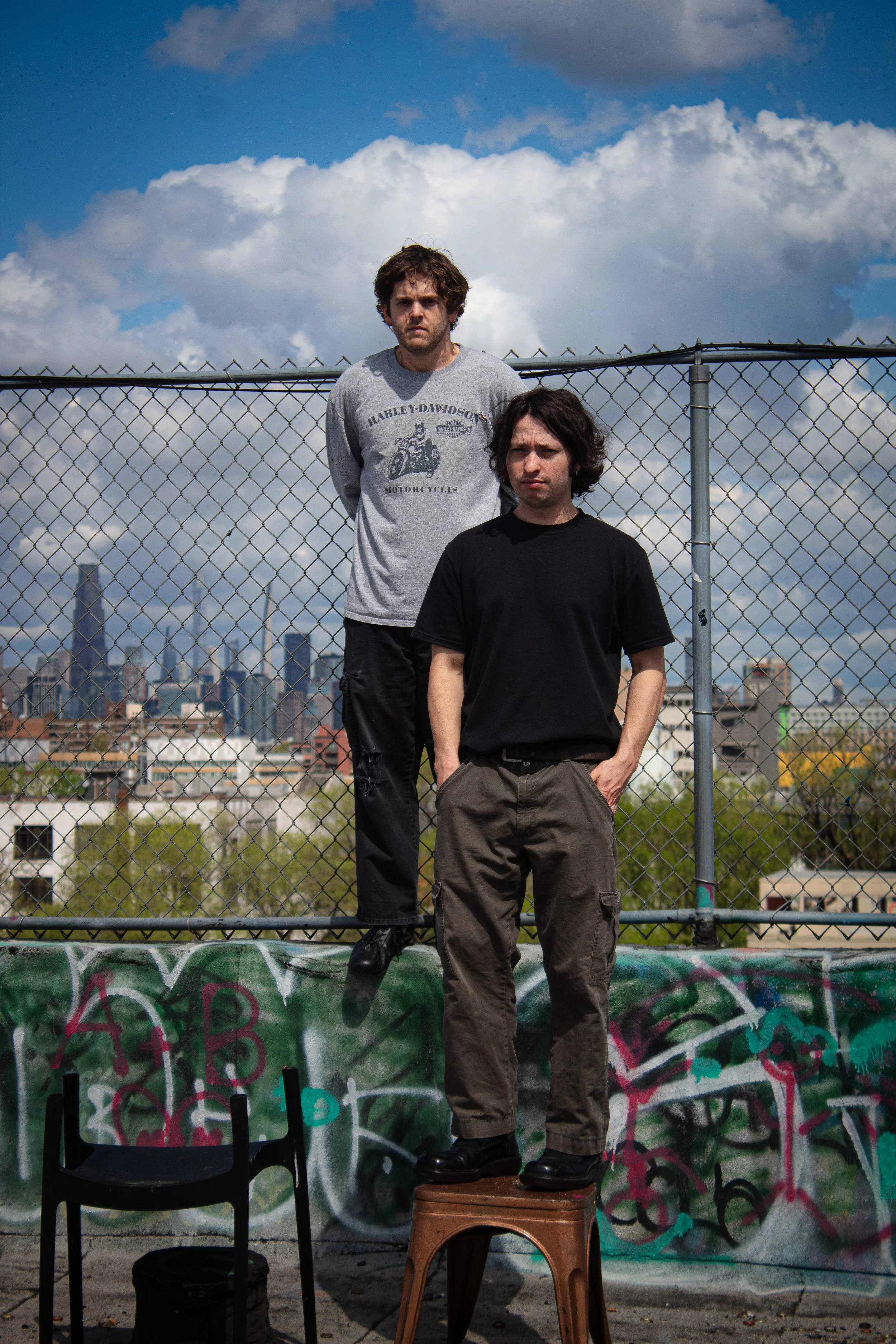
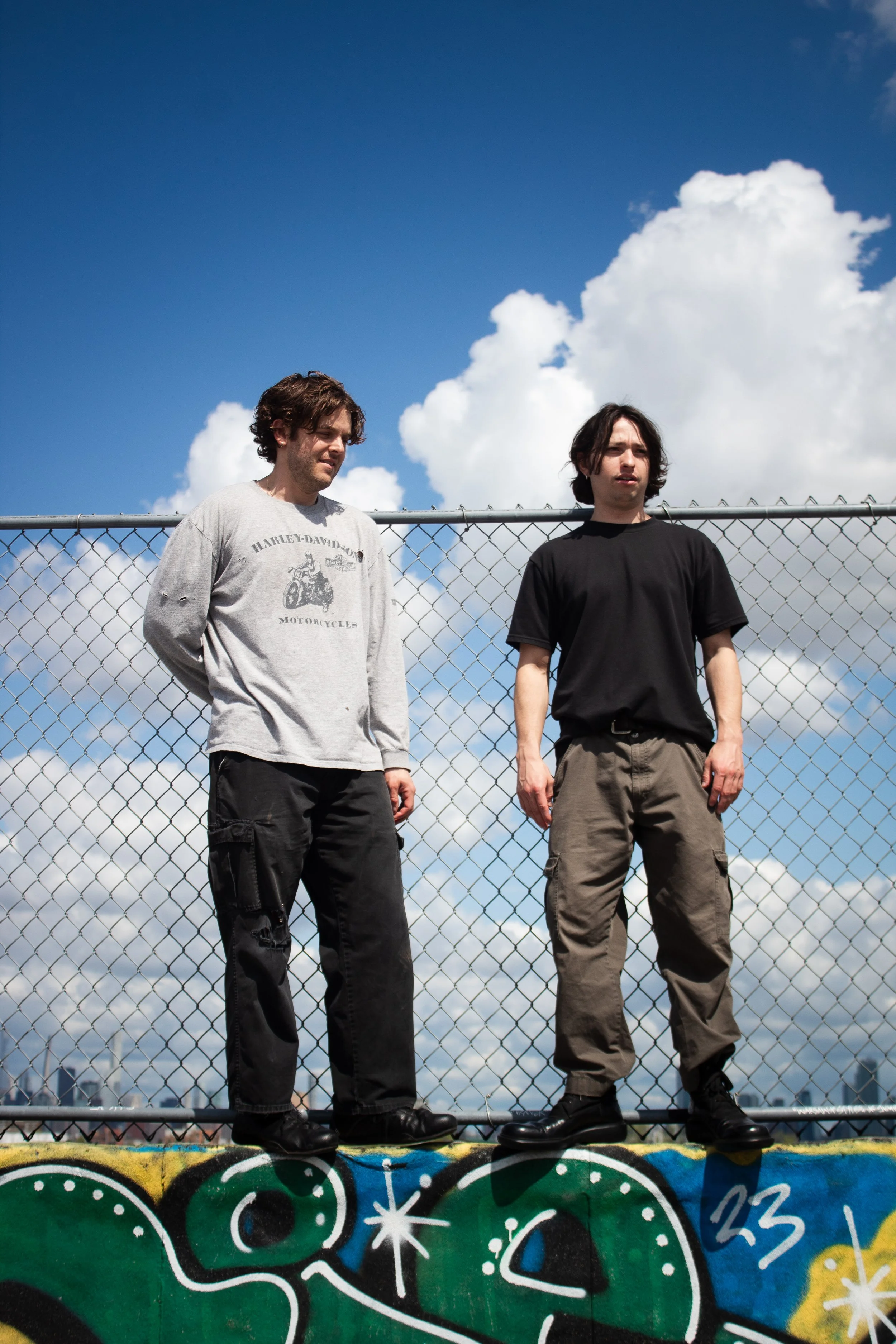
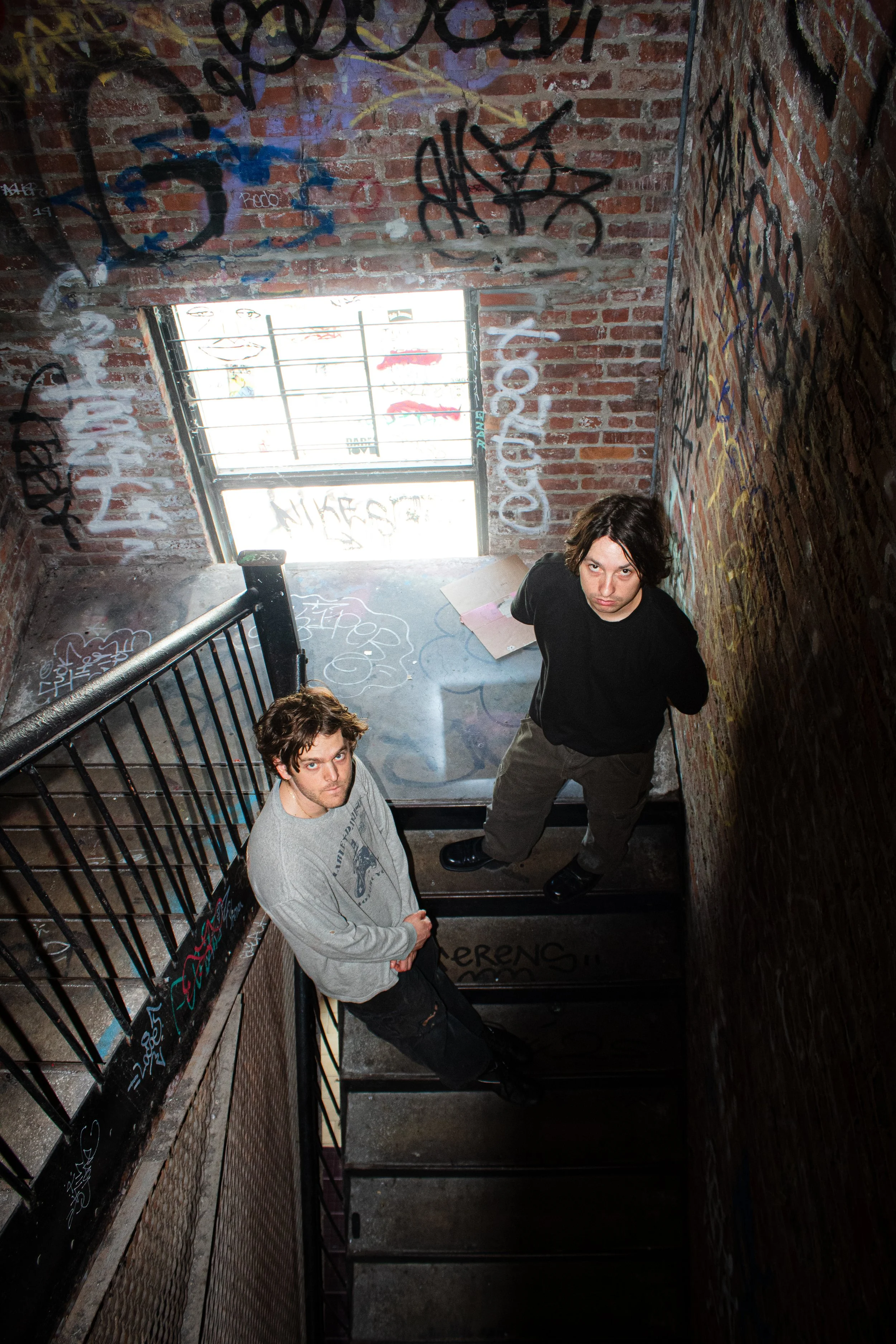
Brooklyn-based duo Ray Bull’s voices weave together seamlessly on their latest record Please Stop Laughing, out on May 8th. I caught up with the band, formed of Tucker Elkins and Aaron Graham, in anticipation of their first album release since their debut in 2021.
The two met while at art school, leaving with what felt like “a bunch of ideas and no way to make money.” Disillusioned with the social climbing of the art world, the pair started sharing song demos with each other and later decided to refocus from making art to making music. Unlike art, where it felt like they needed to use status to convince people their work was worthy of attention, with music “you either hear it and have an immediate connection to it, or not,” explained Elkins when asked what drew him to making music.
Keeping their visual arts skills “infused into the blueprint,” they refuse to conform to the boundaries of genre. With a variety of influences, including the Beatles, Wilco, and a sound sometimes reminiscent of the Strokes and other times displaying hints of Crosby, Stills, Nash & Young, their upcoming album showcases the duo’s versatility and impressive range. Having gone viral for their series of song mash-up videos, we discussed the impact of social media on the duo’s relationship to music and songwriting, as well as how they are preparing for their upcoming US tour. Despite the physical and emotional toll it takes, the pair’s love for writing and performing is palpable.

PETTY: How would you describe each other as individuals?
ELKINS: Aaron’s got a little freaky genius inside of him but it’s contained in this organized, focussed shell. When you meet him, maybe you think he’s kind of straightforward, but he’s got a little something else inside.
GRAHAM: That doesn't sound that different from how I might describe you. We can both zero in and focus on getting something done, but we’re also always looking for whatever the joke is or some form of levity. There’s some balance there and we take turns; I’ll be the focused and serious one and Tucker will be adding the lightness and humor, or vice versa.
PETTY: You wrote some of the songs on your latest album quite a while ago. What do you think led to now feeling like the right time to bring everything together?
ELKINS: Just guilt for not having finished it.
GRAHAM: The short version is that we were really due, and the long version is that we had come to music from making art and started off by making stuff for ourselves. Then we started to take it more seriously and we were like, wait a minute, how do we actually get this music out into the world? We really focused on getting a team and finding ways to connect to the existing music system. Meanwhile, we were writing tons and tons of demos and our vault of music was just amassing more and more songs. Then, we finally got to the point where we had a deal with a distributor and had our whole team set up, and it was like, wow, that actually took two years and we’re ready to put out an album.
PETTY: Given your visual arts backgrounds, do you think you take any inspiration for your music from other art forms? Do you ever see a painting or film and think about writing a song about it?
ELKINS: I think that our art backgrounds and interests influence our sensibility on a more molecular level. Thinking an artist has a really interesting creative approach, and that influencing how we approach the next thing we do. I’m sure there’s some kind of contamination from what we used to do coming into what we do now. When we make music, sometimes it feels like we’re making something else, [like] a sculpture or something. We’ve always kind of felt like it was an extension of what we had already been doing.
PETTY: What influenced you to transition into making music?
GRAHAM: I had worked myself into a corner with art. I was making this weird photo conceptual sculpture work and I realized that nobody was paying attention to it. I felt insane because I didn't think anything I was making was making sense to anybody else, so I started drifting away from it. I had always played music for myself as a hobby, but then I started more seriously writing songs and it took over that creative space. I think that was the inspiration. The need to continue to make, but having it be new, fresh and exciting. Music was the new, fresh, exciting thing at the time for me so I jumped all in.
ELKINS: It wasn’t something that was planned, at least for me. Similarly to Aaron, I was doing some art stuff and doing some film stuff, and then making music felt like this interesting hobby that just grew a little bit out of control, which I think is a good way to start.
PETTY: What’s your typical writing process? Do you still write songs separately and then share them with each other, or do you write together in the same room?
ELKINS: We do both and it’s a little bit of a variation every time. It’s never quite the same. Sometimes you have to nurture some little thing that you’re doing for a minute uninterrupted, and then it’s easier to bring it to a collaborator and get it going. We have started from nothing a couple of times.
PETTY: When something impactful happens to you, do you feel the need to write about it straight away or do you revisit it after some time has passed?
ELKINS: I think if you immediately wrote about something that happened to you, it would be pretty shitty. You’d be saying some funny things about it. You probably have to wait.
GRAHAM: I never feel like I’m sitting down and writing about an experience. I either lie to myself and say, “This is about somebody else,” or I don’t even think about it. I’m never in a conscious state of, “How did that make me feel and how can I put it into words?” It feels too ridiculous and I don’t trust it. I don’t trust that I would be able to represent those feelings. It feels better to write in a more roundabout way after your mind and body have processed something.
PETTY: Which songs on the album were the most emotional to write?
GRAHAM: For me, “Baby Jean,” and Tucker wrote, “It’s Probably Nothing,” which feel like they pull at the heart strings most.
PETTY: You post a lot on social media, how do you think it has affected the way that you write music?
GRAHAM: It’s probably had a deep effect on our music because it exposes you to so much. We particularly are like sponges, so we’ll hear something and then it’s easy for us to think, “Wait, should we be doing something like that?” Which is good and bad. Sometimes it will force you to sit down and make a certain type of music that you otherwise never would have, which inevitably turns into your own version of it that can be interesting. Then sometimes it can pull you in too many directions and give you this empty feeling of, “Wait, who am I? Shouldn’t I just be doing the thing that makes my heart sing?” It can make you experiment and think about different things, but also pull you apart.
ELKINS: It’s true. It’s easy to get brainwashed by trends and things that you see, and it’s easy to forget yourself sometimes.
PETTY: With you going on tour soon, what do you think you’ve learned since your last tour?
ELKINS: The first tour you’re not prepared for the hot and cold and how much endurance it takes even just to sit and drive for hours. Now my body’s probably more prepared. Psychologically it’s like training. Your body remembers how it feels and it’s less shocking.
GRAHAM: It’s a pretty gruelling experience, so a big takeaway is that you really have to prioritise taking care of yourself in the in-between moments. Finding ways to centre yourself and be healthy, taking care of yourself and trying to be in, and appreciative of, the moment. Every day there’s both boring and exciting. You’re in a car for six hours but then at the same time you’re in a place you’ve never been and you’re getting out of the van and playing music for people who are excited to hear your songs. So I think just being grateful is something I’m going to do this time.
PETTY: What has been your favourite show you’ve played so far and what made it so memorable?
ELKINS: When we played at the Troubadour. It was the last show of our tour and the crowd was amazing. And it’s my hometown, and then my family was there so that was pretty cool. Another one that was cool was when we opened for Sunroom in Webster Hall. It was almost all their fans there. This was years ago and it felt like the first time we experienced playing a show and winning people over in the moment. We started playing… and when we ended it felt like everyone was on our team. That was a really great feeling.
PETTY: What would you make a cover album of?
GRAHAM: For a minute I was into this songwriting where I would go onto ultimateguitar.com which has all the guitar chords for songs, and I would look at classic songwriters like Hank Williams. I would pick songs that I didn’t know at all, but I had the lyrics and the chords and I would just come up with a melody myself without hearing it. It was a really fun way to make music because you didn't have to think about chords and you didn’t have to think about lyrics, so you could just experiment melodically. We actually ended up with a really cool one. I always thought that would be a nice idea, putting out a cover album and you don’t listen to the actual songs until you’re done with the whole thing.
PETTY: Having spoken a lot about childhood, which soundtrack for a film you watched growing up would you want to redo?
ELKINS: Let’s see… Jaws. The whole two note thing, I don’t think it’s quite working (both laugh). I think the most fun type of movie soundtrack would be for a horror movie. I feel like they’re the most accepting of experimental sounds, so that would be cool. Maybe The Shining.
GRAHAM: What did I watch a lot? I watched a lot of rom-coms because I have an older sister. I just rewatched 13 Going On 30. I used to think it was so good and then we rewatched it and it was really not very good (laughs). But something like that would be funny to do the soundtrack for.
PETTY: Which other music genre would you like to experiment with?
ELKINS: Some kind of hardcore.
GRAHAM: That would be funny.
ELKINS: Really angry sounding.
PETTY: Do you find a lot of new music through social media?
GRAHAM: Yeah, I’ve discovered a lot of stuff…it’s something we struggle with and think about all the time—“discoverability.” I don’t know if there’s a ton of music that I’ve found online that I actually incorporate into my life and that I love deeply to where I can equate it to the music I listened to growing up, and how that music makes me feel and fits into my life in a special way. Maybe this is negative or nihilistic, but we’re just bombarded with so much content. It’s crazy to see a song and think, “I like that,” and then you swipe and the next video you see is tips on how to reduce toxins in your liver, and here’s a supplement you should take. Everything’s on the same playing field and it kind of brings everything down.
ELKINS: If I walk into a cool bar sometimes, they’ll be playing something that I think is good, and I can either humiliate myself and try to Shazam it or I can ask the person what it is. I’ve found cool music that way. It’s also more interesting to hear something disembodied. So much of music today is having to market yourself, and when you do that, you have to come up with things like how you look, and your image is important. It’s interesting to just hear something without that tied to it. It feels like success and how much you can cut through is riding on how you’re perceived visually and your aesthetic and things like that. It’s nice to be relieved of that sometimes and just hear something naked in the world and make up your mind that way.