REVIEW: MITSKI’S NOTHING’S ABOUT TO HAPPEN TO ME EXPLORES CYCLES, IDENTITY, AND ISOLATION
FEBRUARY 27, 2026
Written by Ellie Noti
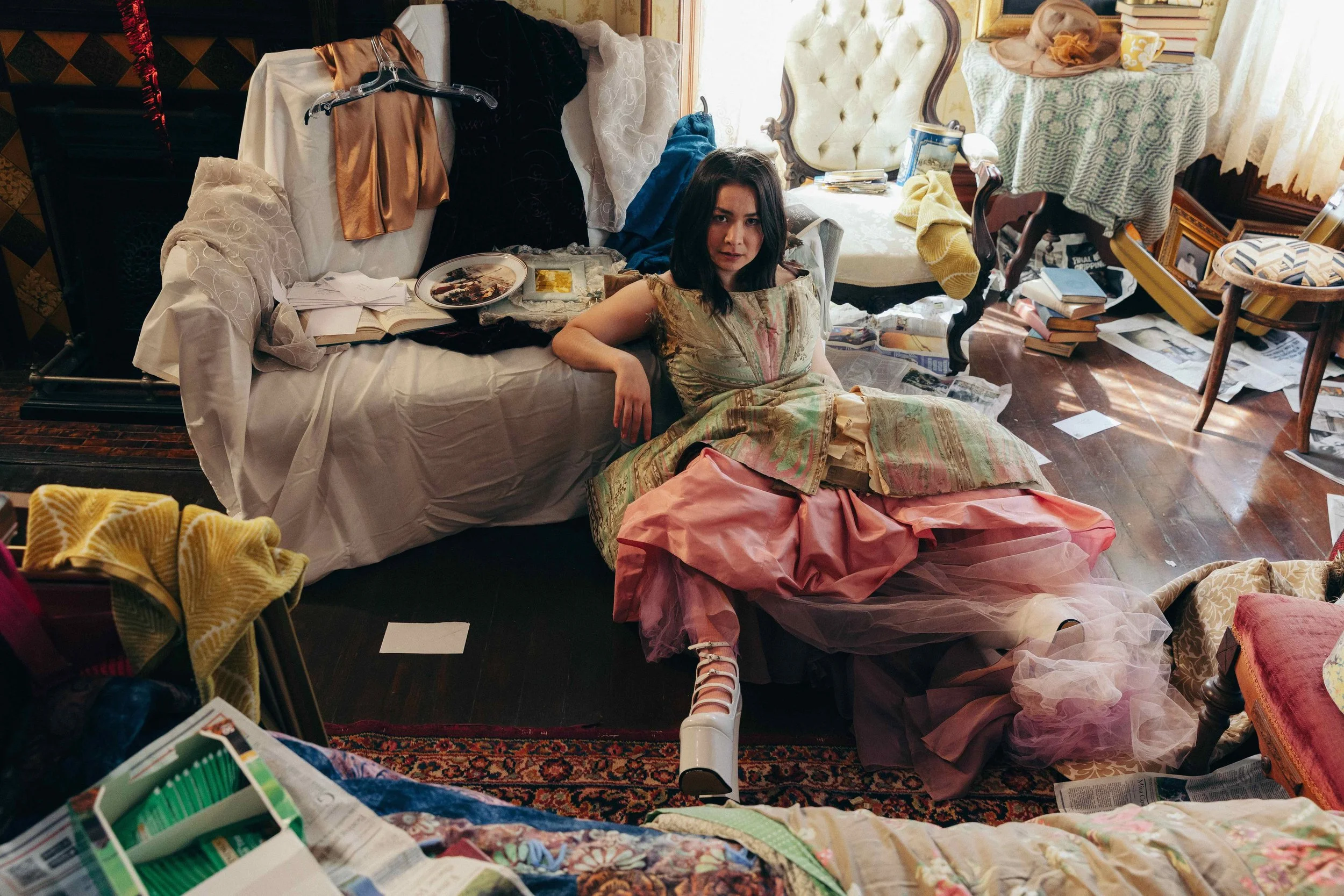
Photos by Lexie Alley
Filled with orchestral movements and bittersweetly moving beats, Mitski’s Nothing’s About to Happen to Me weaves a nuanced narrative about cycles— isolating and maddening loops that must, at absolutely any cost, continue. As with This Land is Inhospitable and So Are We, the narrator’s own sense of identity is put up against what she assumes others must expect from her. This time, the vibe between songs alternates from dark and brooding to upbeat and manic as Mitski evolves her character into a repressed social outcast—the reclusive sister of This Land.
“In a Lake” builds with steady acoustic strums beneath a softly buzzing accordion as Mitski warns the listener about the claustrophobia of a small town, where “…anyone you can get close to/Smells like your first time around.” The verses call from beneath you as you float on the in-between of your potential and your shortcomings, unable to escape the reminders of either. The final chorus blooms like the sun on your face, cradling you half in the water of the lake as the orchestra swells.
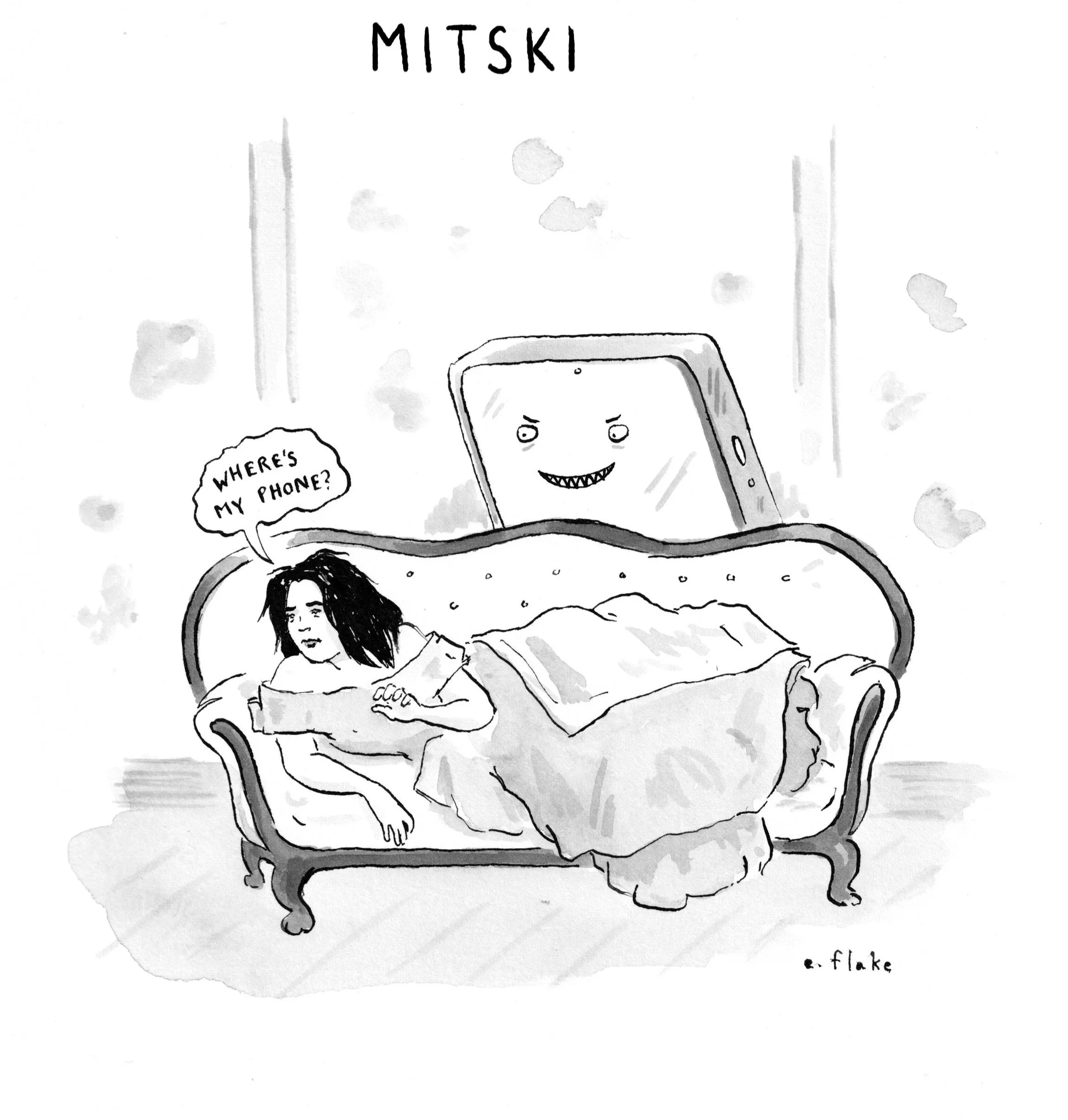
Cartoons by Emily Flake
The upbeat, chaotic, and unfiltered “Where’s My Phone” takes the energy in a slightly different direction as it chants repetition, the maddening comfort of autopilot, the dysfunction of a slightly slipping routine that begs to slip further but wouldn’t dare. Over the sound of open cymbals and fuzzy electric guitar, Mitski brings us into a mind that wishes its anxiety away in favor of a simplicity that would translate into a freedom of sorts. This time, that freedom is framed as a compromise; like a “bug in a citronella candle,” you cannot indulge in your deepest, unhinged fantasies without an ending in demise. A strong downbeat mixed with arpeggiated vocals mimic manic impulses contained only by sheer refusal to rock the boat.
As Mitski’s voice swirls with the lilting of brass and clarinet of “Cats,” she takes us back down to Earth where we are introduced to her two cats who she asserts will never leave her side, even as her partner threatens to. She refers to them once as “rescues,” an implication that she has saved them even though, as she concludes in “Where’s My Phone,” no one will save her. She asserts her identity in this song, “So I’ve been trying/To stop trying/To be like/Someone you’d still like,” seemingly accepting the fate that comes with this assertion as she sings, “So I won’t leave you/Guess it’s up to you/If you choose to go.”
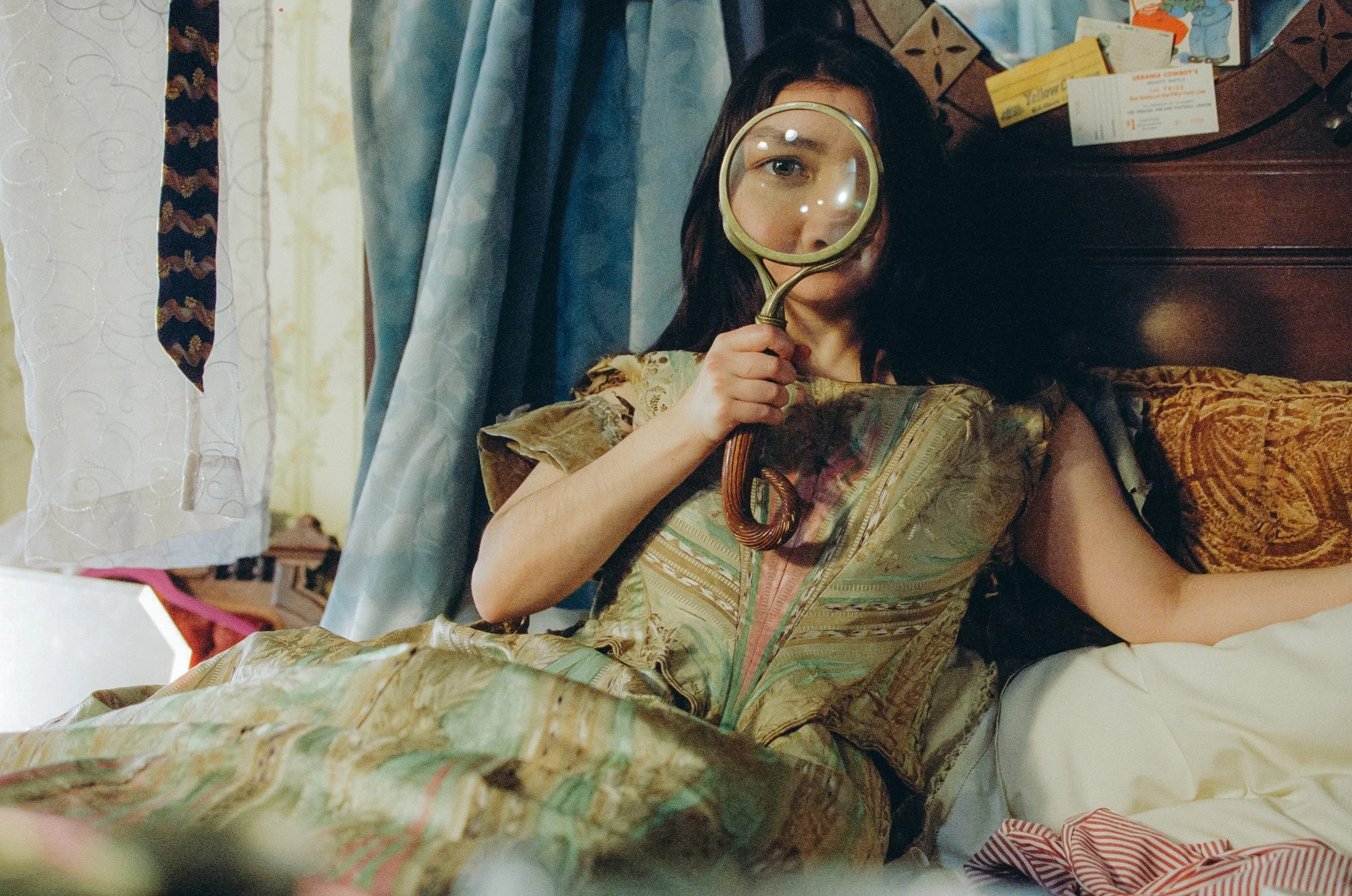
Followed by this refusal to change or to leave is, of course, the dark, righteous bass of “If I Leave.” It’s simple lineup of steady drums, electric bass, and ambient vibraphone break suddenly with the bridge where she admits she sees no light at the end of the tunnel, only darkness stretched out in front of her—a confession that gives a heartbreaking new meaning to the line, “The lights all around you, the dark safe inside” from “In a Lake.”
The haunting synth of “Dead Women” dances beneath the question of whether the narrator’s easy death would be easier to bear than her stubbornness, whether she would be loved more if she was not allowed to question the ideal perception of her identity. Mitski paints a gruesome scene of murder and burglary where the perpetrator chooses which parts of her that she gets to keep and which do not align with this idealized perception, turning her into someone palatable and pliable, “So we could fuck her as we please.” Our brush with death continues in “Instead of Here,” where vibraphone rings out softly beneath the drums and guitar, a gentle presence that stays with the narrator as she cycles in and out of depression.
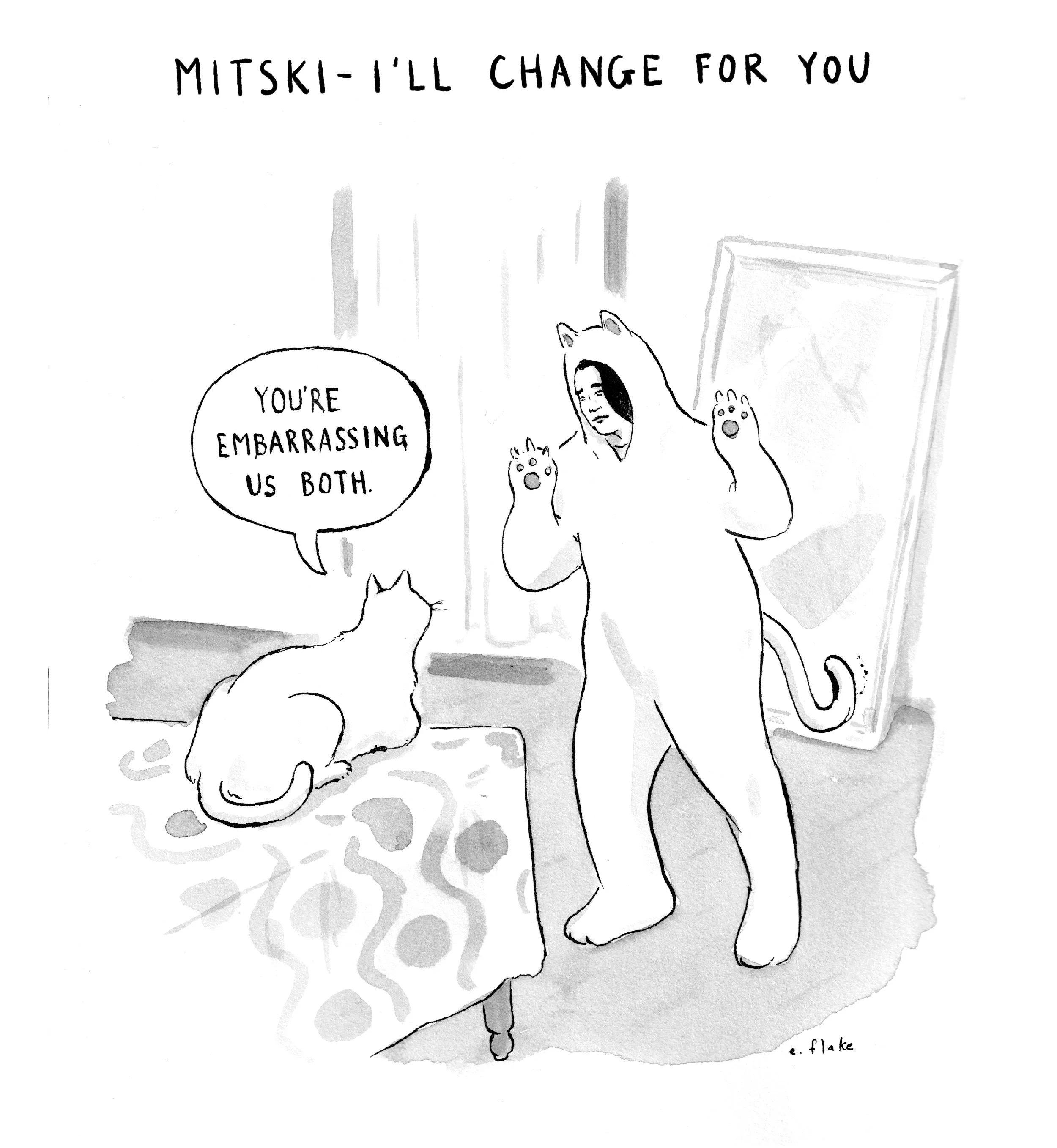
Introduced by a jazzy piano riff and hi-hat beat, “I’ll Change for You” stands out against the otherwise brooding and indie vibes of the first half of the album. It is almost ironic as she sings, “I’ll do anything/For you to love me again/If you don’t like me now/I will change for you,” after much of the preceding lyrics detail her refusal to change. The clinking glass and laughter of the bar adds a playful ambience to an otherwise melancholy melody, and as the strings swell and the night comes to an end, Mitski drunk calls her ex via song.
The rest of the album takes us through the complex, intertwined feelings of anger, sorrow, and relief as she rebuilds herself in a new home and tries to find the light again, starting with the slightly asynchronous echo behind a confident, “One two, one two/One two three, one two three/One two three four/One two three four five,” as we are counted into “Rules,” where triumphant trumpets ring and the drums swing in the background. She counts as if she knows what to expect next, as if she saw it coming, as if she had lived this before.
The first of the final two songs, “Charon’s Obol,” Mitski compares herself to a coin placed in the mouth of the deceased as a token for allowance into the afterlife. The strings and vocal chorus add complexity while the guitar grounds us before giving way to the final song of the album, “Lightning.”
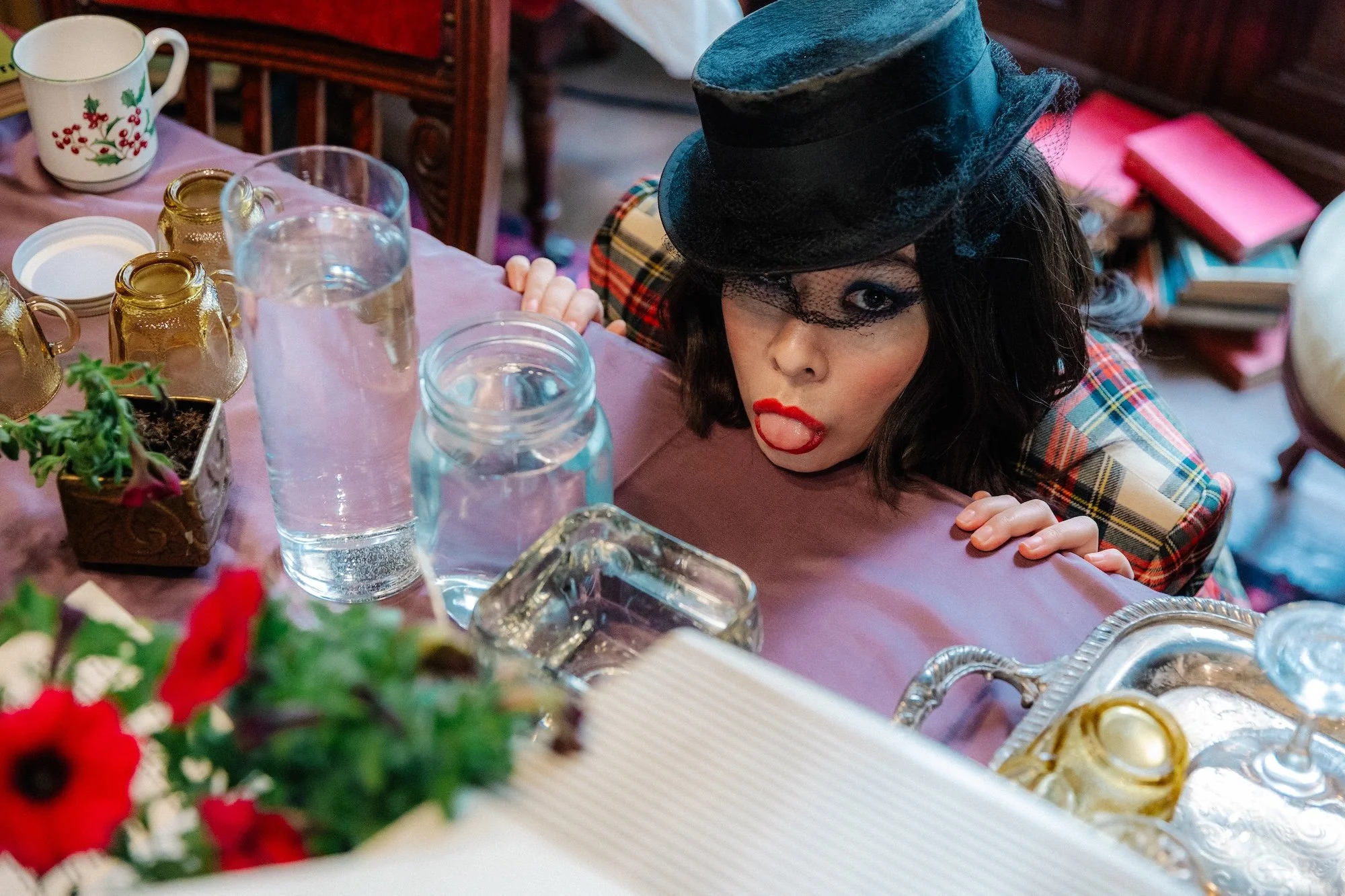
We end the album the same way we started it, begging to be reborn, with simple verses that build into a chorus bigger than itself. It is with “Lightning” that the cycle begs to be reset: “When I die/Could I come back as the rain?/See the world again/To fall again.” This time, however, she welcomes the darkness she bottled inside herself with the first few songs. It is “All the better,” now, the effect her own sadness would have on the reemergence of the sunrise, the reflection her own darkness would allow the moonlight. We finally see the true consequence of unrepressed fantasy; while you may not be able to indulge without bringing on suffering, it is exactly that cycle of pain that makes the joy just that much more worth it.
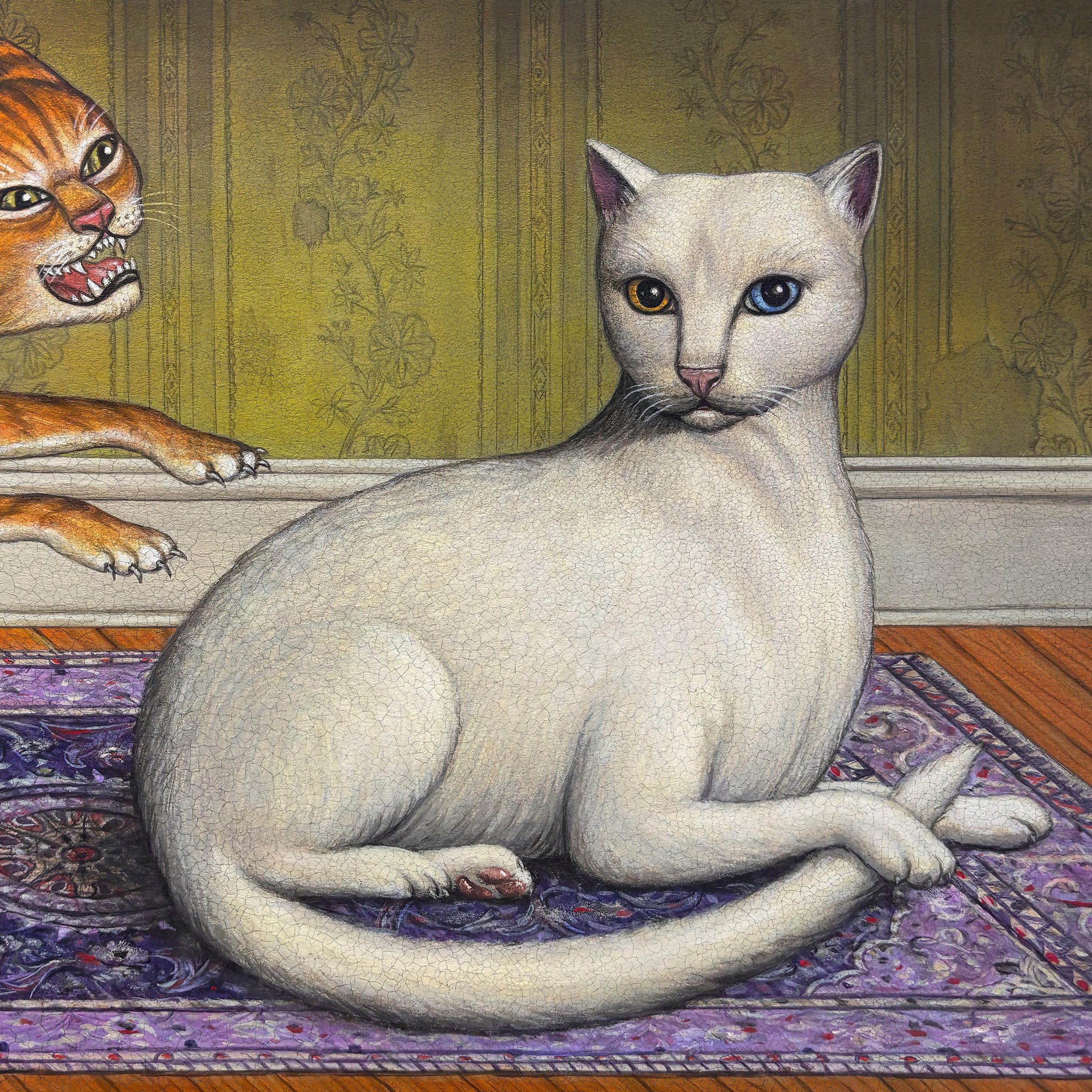
Album Artwork by Marc Burkhardt