November 2, 2026
Written by Olivia Elizabeth
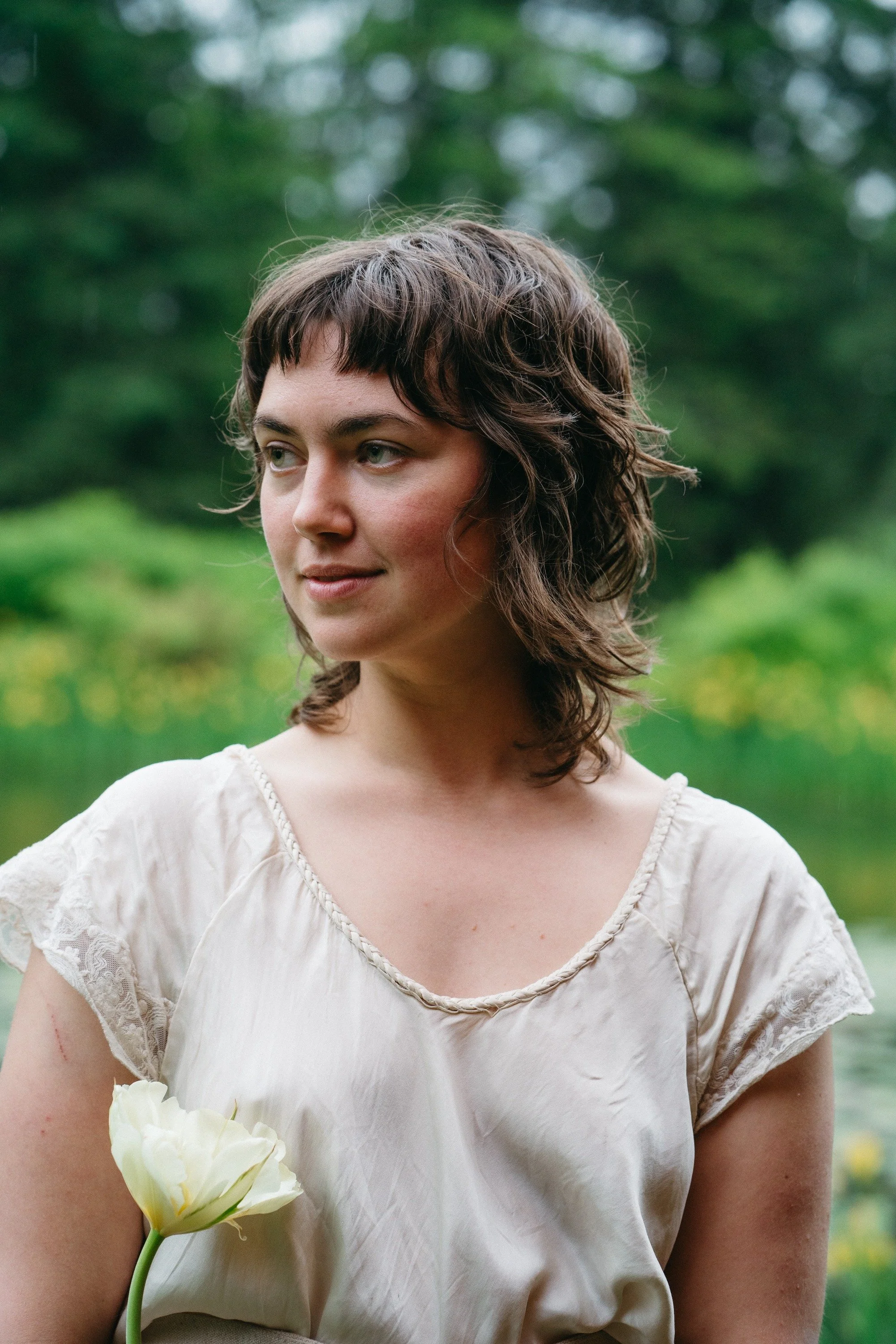
Photo by Harper Pictures
MULTI-DISCIPLINARY ARTIST KRIS MOUNSEY OF SECRET MEETING STUDIO IS A MULTI-TALENT WITH A MULTI-FOCUS IN CERAMICS, TEXTILES, FIBER ARTS, AND OIL PAINTING— Although always creating, her passion for clay making began around 10 years ago. In 2018, Kris was caught in a perfect storm– a life change and a local ceramics class. Since then, her pottery interests have consumed her. She is always thinking about the next opportunity to create. In this interview, we got the chance to discuss how she feels drawn to certain media depending on the season, the importance of creating useful pottery even if the only “use” is its “display of beauty,” and how to shake the rigid mindset that can at times surround all that we create.
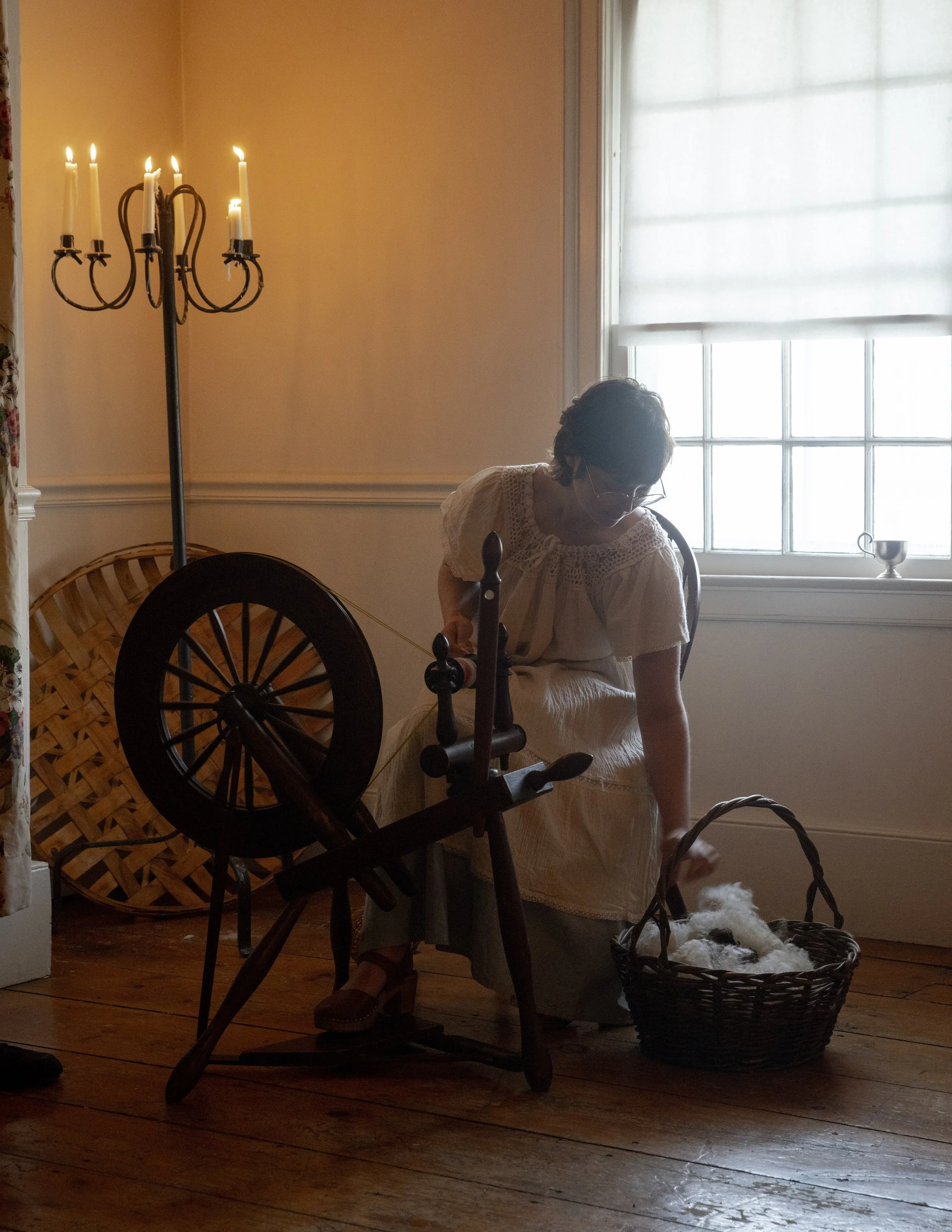
Photo by Isabel Butler
PETTY: What initially sparked your creative interests?
KRIS: This will sound cliche, but I feel that I have been making things for as long as I have been able to speak. As a child, I compulsively made things out of sticks, clay, beads, paint- whatever I could get my hands on. It’s hard to say when and where and how it began. My parents encouraged me to follow my artistic curiosities very early on and throughout my teenage years, into college, and I have been very lucky with that support. I have learned that creativity is a very different process than inspiration. Creativity almost requires a kind of discipline, following the threads of curiosity and boredom within a project. It requires a willingness to be led by process rather than predicted outcome. I am constantly inspired by life and the mysteries of living, and that propels me to learn and create new works.
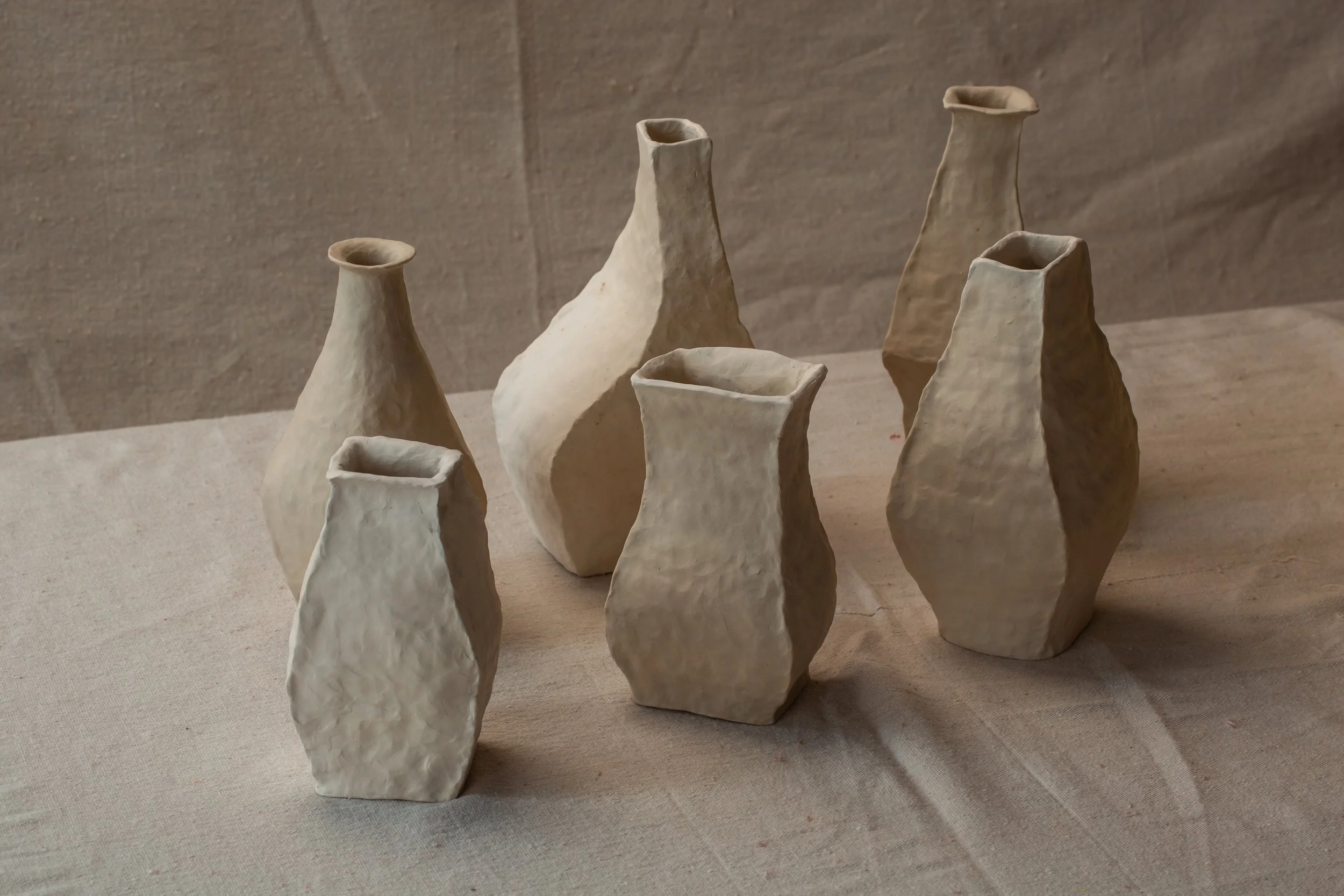
Photo by Chase Bauer
PETTY: Being a multi-disciplinary artist, which medium do you feel yourself gravitate toward the most?
KRIS: Everything has its season, every season is connected, and I love the changing of seasons! Its very flexible for me. I have days and weeks and months where a certain medium will consume my attention, or satisfy a certain kind of craving or way of making. Textile work tends to take place in the colder months, while ceramic work takes place in the warmer months. Sometimes its a practicality. Other times it is strictly a necessity to continue with a certain medium for a project I am working on. Working with clay, fiber and painting all equally lend themselves to being worked on over long periods of time, and they each have their own cycle, so I will often move between them.
The further I dive into one medium, the more it begins to relate to other media I am interested in. For instance, I just visited the medieval Italian city of Assisi, and was so inspired by the renaissance frescoes and decorative architectural elements, that I started researching everything I could about pigments and how they are made, and how the type of binder of the paints, egg or oil, makes a difference in the painting. It is actually so closely related to the chemistry and artistry involved with making ceramics. In these frescoes, there are very complicated woven fabrics and tapestries also depicted in the scenes. They were painted over 500 years ago on a limestone wall, and I was so fascinated by the colors that are still present in these painted fabrics, that now I want to know more about the relationship between natural dyeing wool and silk and how those colors can be rendered in painting pigment, and vice versa.
One of my current projects is looking at a warp weighted loom, which is one of the oldest versions of a loom, and reconstructing a piece of woolen sailcloth using methods of weaving that have surprisingly endured for centuries, though this knowledge was almost lost. Women in Norway, up until the 50’s, had been weaving colorful tapestries for bed covers on this kind of loom, even though pedaled floor looms were quite popular in homes by then. The warp weighted loom has been found in many archeological sites, and at times ceramic pieces were used for the warp weights. I also love that figures of weavers at the warp weighted loom are depicted on ceramic drinking vessels in Antiquity. You can see how I never could choose just one medium! All these media intersect.
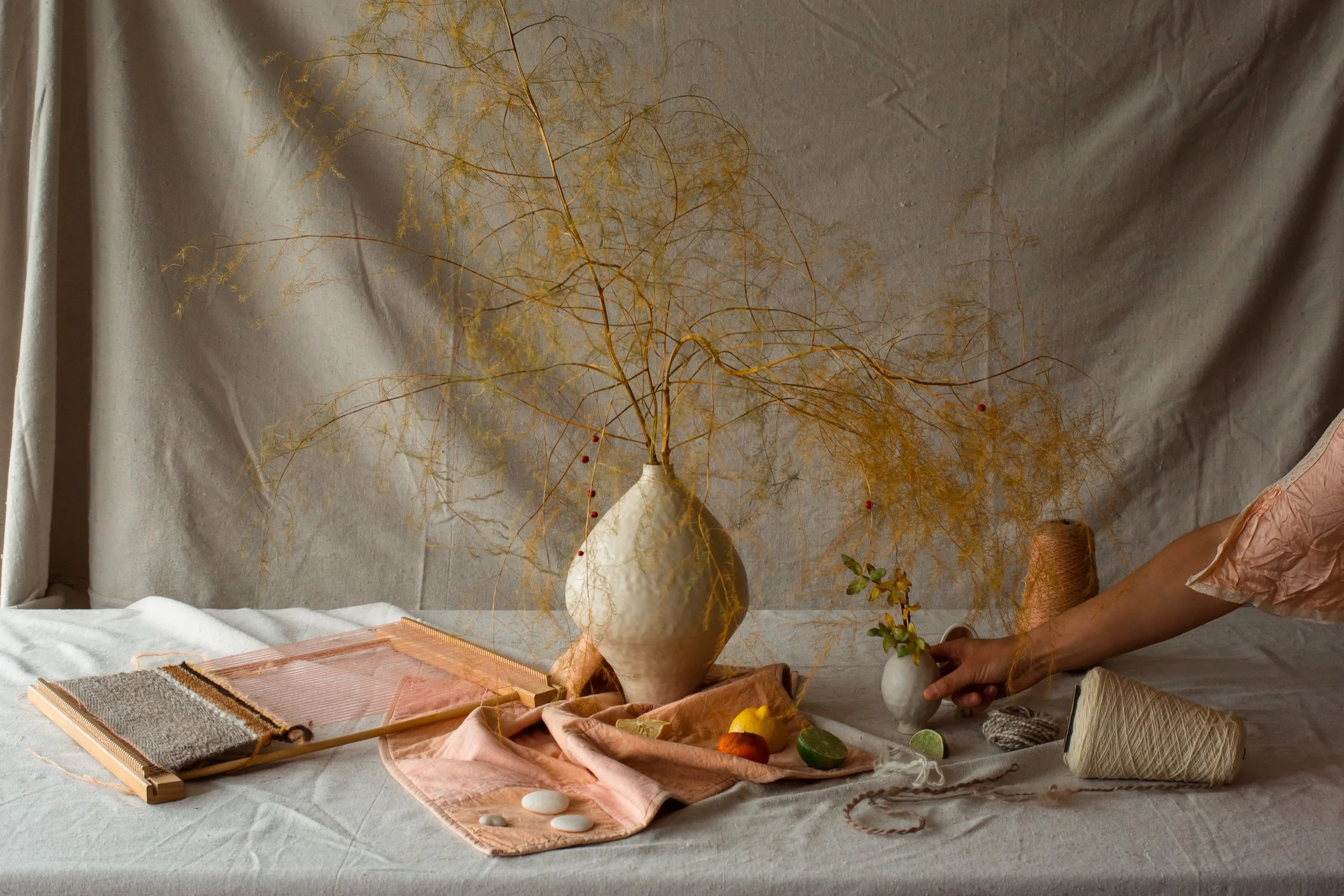
Photo by Chase Bauer
PETTY: When starting a piece, whether that be a painting or pottery, what does your process look like? What is a tool you often use that you could not start a project without?
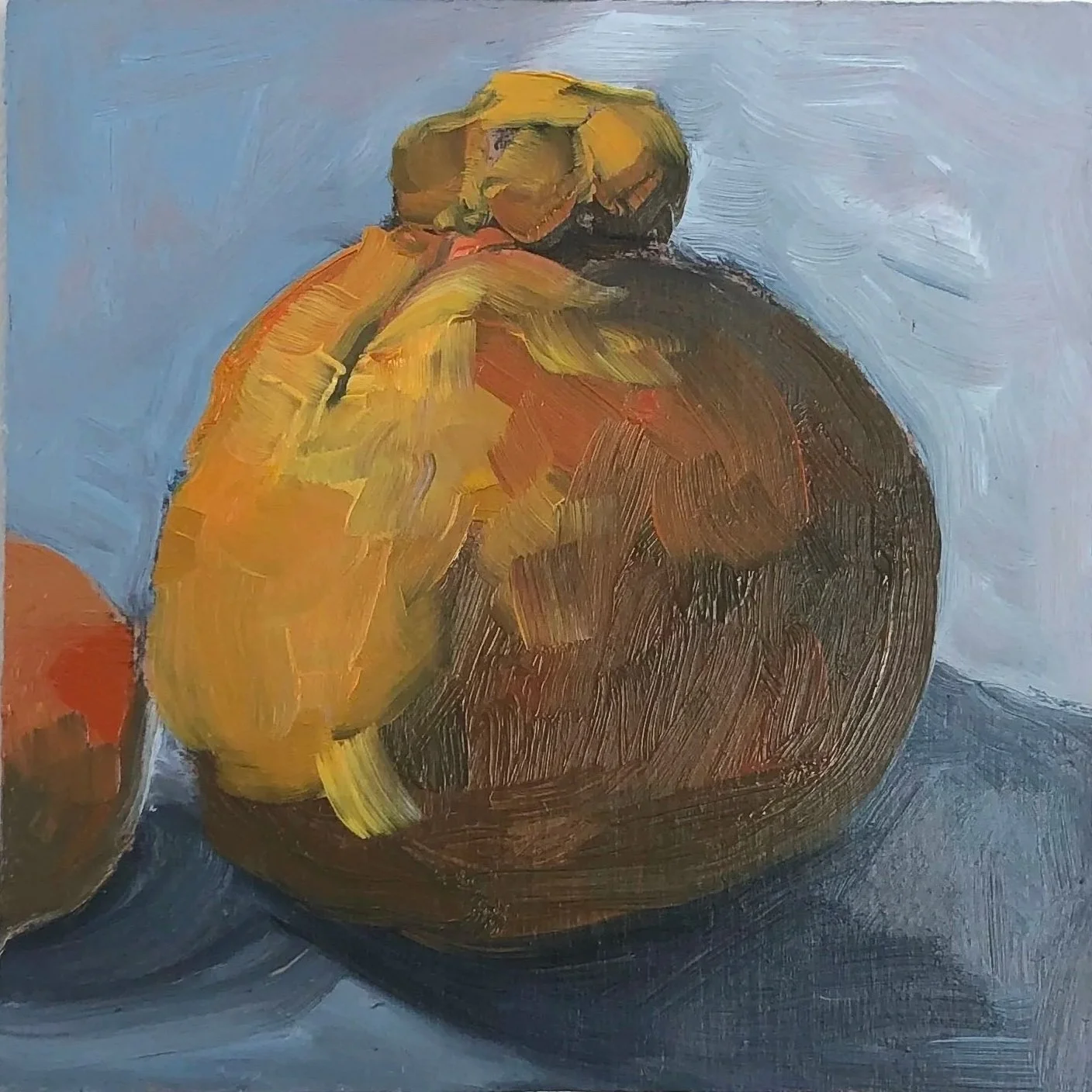
KRIS: Everything starts as an idea or thought experiment. If it sticks around for long enough in my brain, I will write it down in my notebook. Sometimes it takes a long time for a piece to go from my mind’s eye to the physical world. Having a good set-up makes for an easeful time in pursuing a project to its completion, like how chefs have mise-en-place before they begin cooking a meal with many parts. I have my mise-en-place setup with ceramics very simplified- a good table with a wicking surface to wedge on, a shimpo banding wheel, a plastic rib and my hands- those alone will take me far with clay. And patience is absolutely key. Patience with myself and with what I am making. From there, I work pretty intuitively. With painting, I still feel so new to it, that I need a reference image to begin, either inreal life or a photograph, because I feel more confident in bringing my attention to something that is physically there. Good natural lighting in the studio is also an important tool for me.
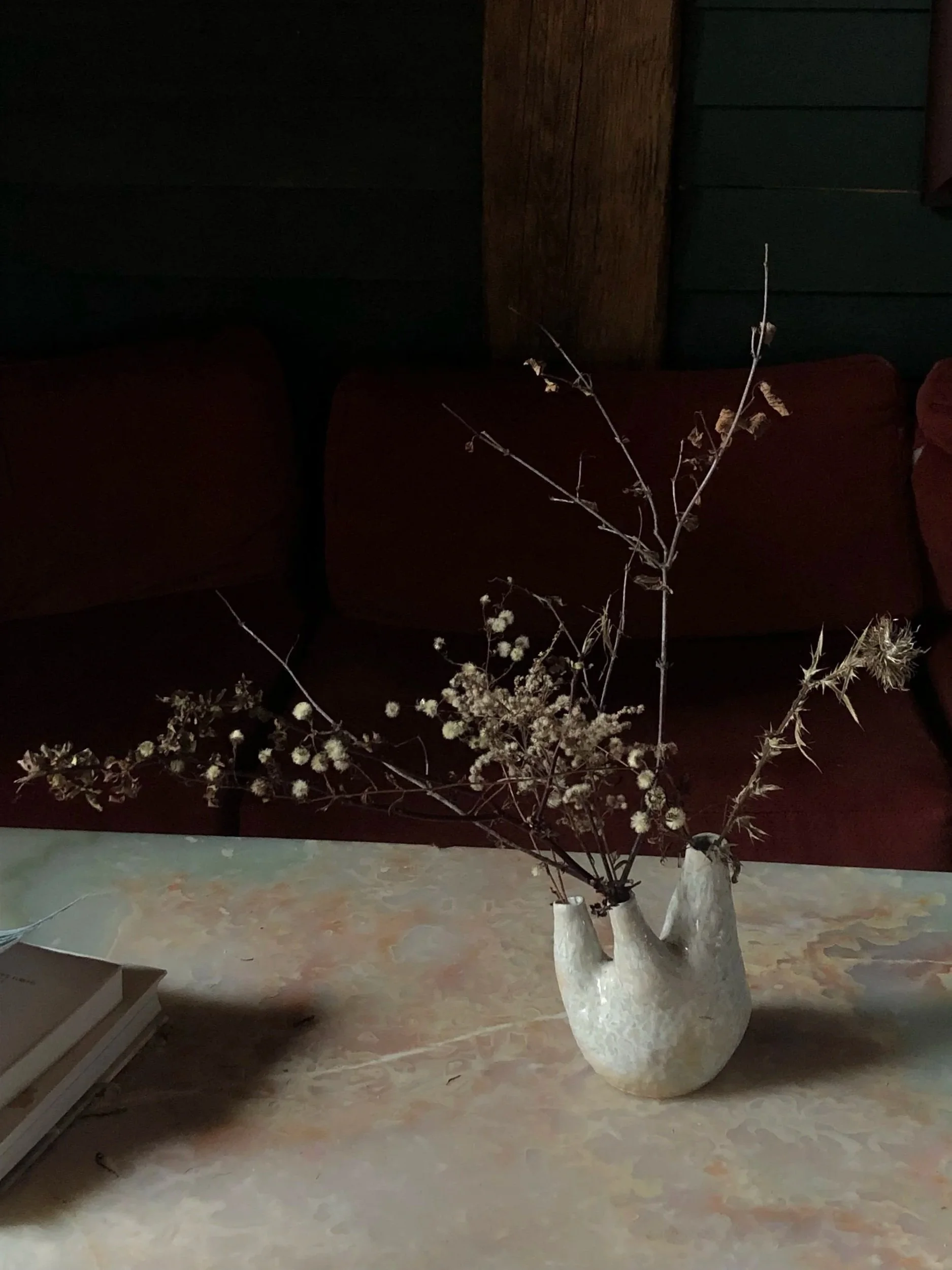
Photo by Warm Flowers
PETTY: Do you prefer creating more functional pieces or sculptural pieces?
KRIS: This is such a longstanding debate. At this moment I tend to approach art making similar to the way the Shakers did. I think that good sculpture is functional, and good functional work is also sculptural, so it’s hard for me to answer this. I am often if not always striving to meet both sculptural and functional needs in my work. Coming from a background in pottery, I am inclined to say that pottery without a sculptural element is boring, but pottery that is strictly sculptural is sometimes kind of wasteful in my opinion. It is important to me that the things I make get used, even if that “use” is the display of beauty.
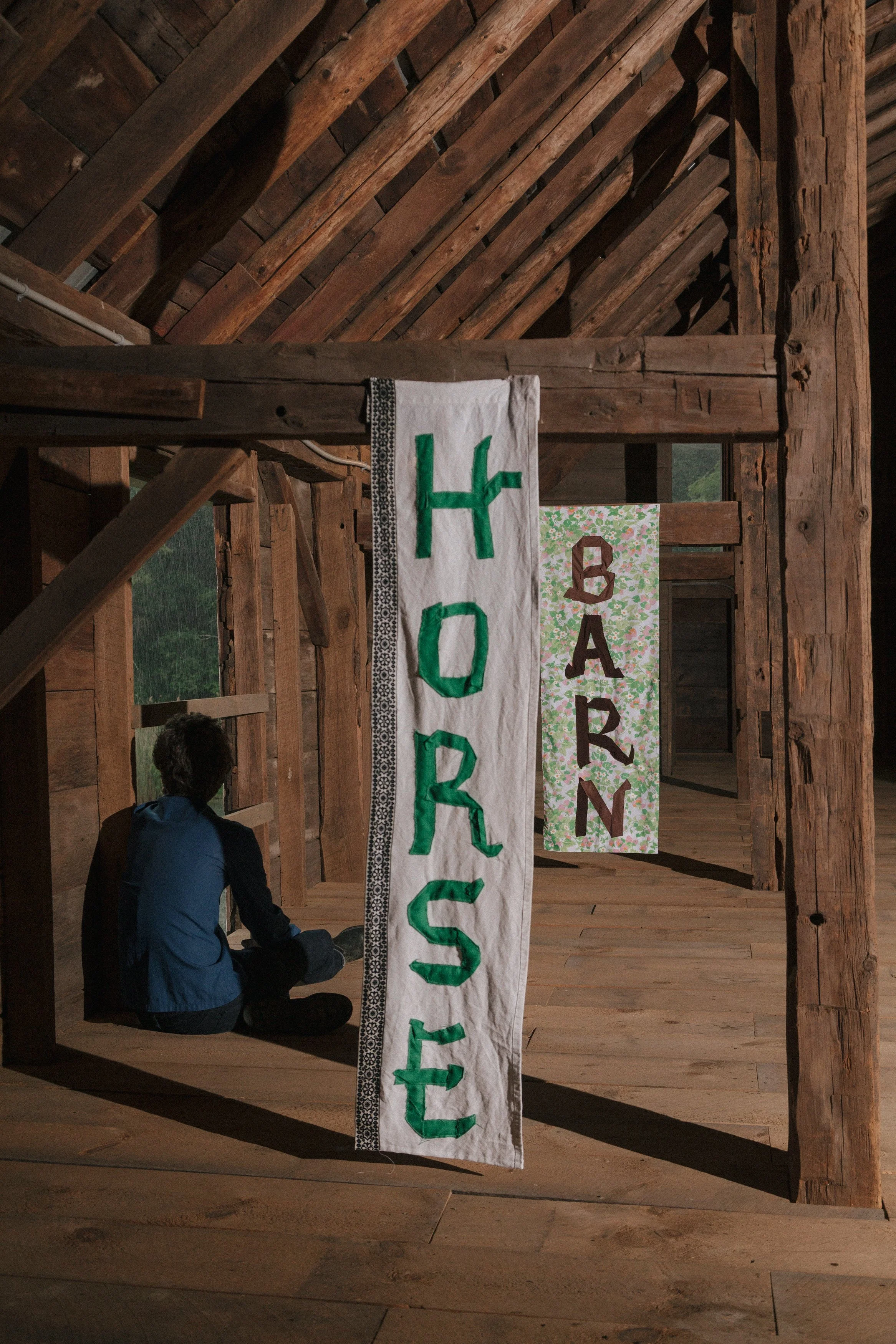
Photo by London Spears
PETTY: You described your initial approach to art being very conceptual and rigid, how did you undo that mindset?
KRIS: I’m still in a process of undoing that mindset! In college, I was more than halfway through my degree studying environmental conservation before I made the decision to also get a degree in fine art. I think that really informed my approach to art classes at the time, and the jump from learning about environmental concerns and biology to art and cultural theory totally rocked my world. I didn’t know how to make sense of it and put it all together but I also loved how connected it all felt.
College professors will ask you to make and justify how your artwork relates to the larger systems of the world, before you even may know how to cook a nutritious meal for yourself, though. I think that sometimes, academia pushes students before they have much lived understanding and experience of the world, to answer questions about how their work relates to the historical cannon and the art market and beyond. This makes sense to me now, that I struggled with this. Because school can be a kind of vacuum, it made for a very rocky experience when I graduated. I was contending, as many of us do when we graduate, with the economic truths of how to make a living, yet wanting to create something with great depth using the skills I had only newly developed at the time.
When I graduated, it felt so urgent, like I didn’t have any time to put it all together. I loved undergrad for so many reasons, and I loved the challenge of learning everything I could, but integrating that knowledge into my own personal practice after the cocoon of college took so much time. Looking back, I think I didn’t know what “my work” even was at that time. It wasn’t an easy experience to learn how to bridge that gap, and for several years I stopped making anything.
It wasn’t until taking a pottery course at a local studio during a personal relationship heartbreak did I begin to let go of the academically informed ideas of fine art versus craft, function and larger significance and meaning in the work, that I had internalized in school, in order to make something that felt meaningful to me. I learned that the process of making something was so mysterious, in and of itself, and that was alluring. The meaning came from the process for me, and that was enough. I followed that instinct and trusted it for long enough where I now can feel grateful for each stage of my education, even the moments where I felt confused and overwhelmed. I had to find ways back to myself, and a way back to the initial curiosity I had for making weird art objects and having a vivid imagination as a kid.
Working with my hands and with clay really helped. I know I am not alone in this, because so many people connected more deeply to art making and handcraft during the pandemic. I was lucky I found this studio pre-pandemic. The community vibe in the pottery studio was so freeing and supportive- it was this little cramped basement, no extra bells and whistles, but everything was there, and there was this thriving group of very talented, mostly older women, encouraging each other and making things in their spare time. It was very inspiring. Those kinds of community spaces of learning and making are so special. It was important for me to see and meet many examples of people making art as part of their daily lives, even if they were not making it their full time job. It was modeling a practice of longevity and persistence, and through that, doing so with so much joy. I try to orient towards joyful making as much as possible.
winter, oil on panel 2026
PETTY: Are your creative outlets sources of relaxation, joy, structure, or all of above?
KRIS: I wouldn’t call them outlets at this point in time— they are the backbone of my life.
My projects and artwork provide structure, connection to myself and others, beauty, education, nurturance, all of it! Sometimes it causes me strife! But the negatives are short lived. Making art connects me to the world in so many unnameable wonderful ways.
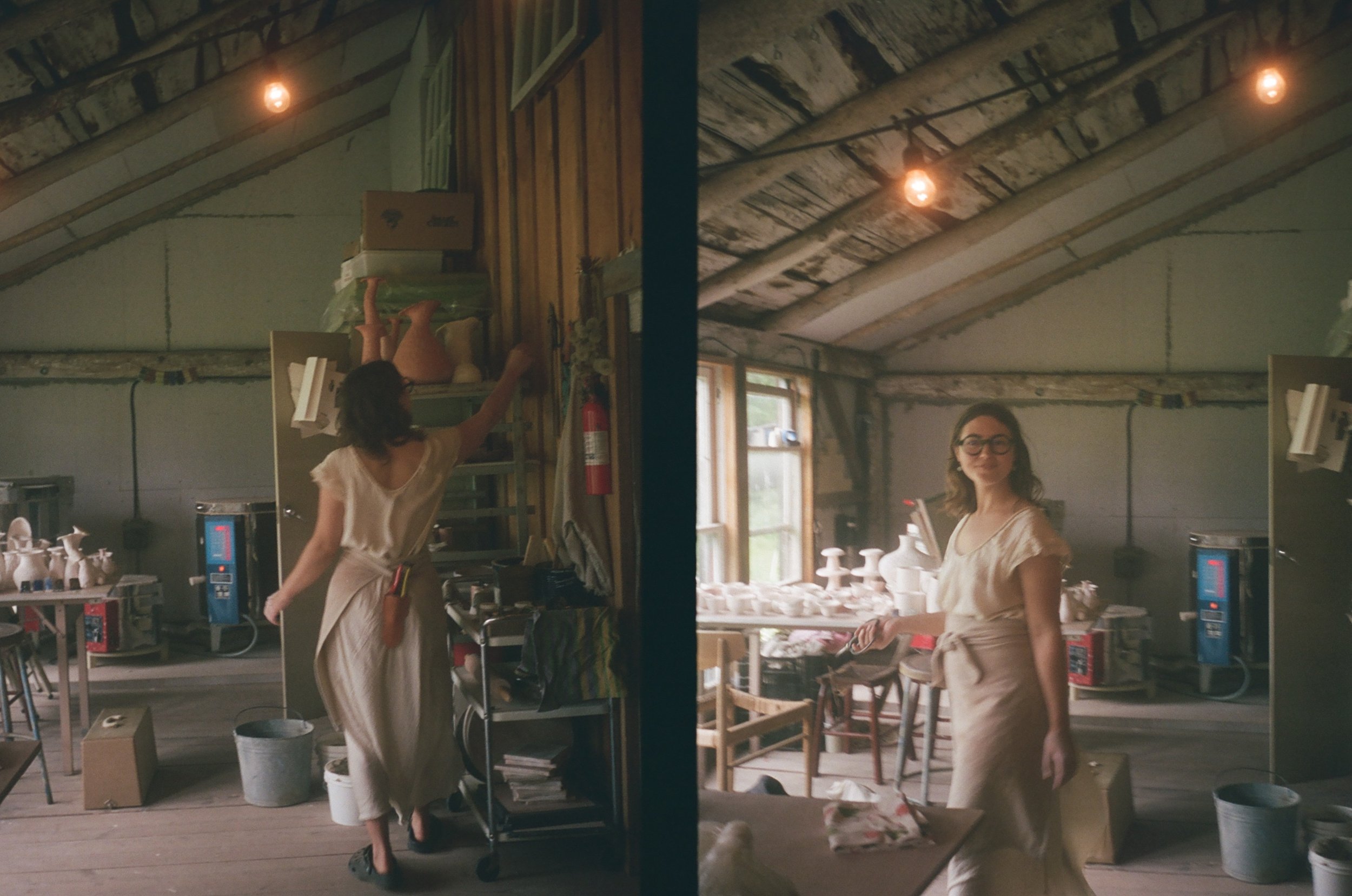
Photo by Harper Pictures
PETTY: How has teaching others helped you learn more about yourself and the kind of art you create?
KRIS: I love this question. I’m very interested in pedagogy, and in challenging my own and other’s perception of what is possible in a space of learning. I’m fortunate to have had many wonderful teachers, and they have all informed my approach to both making and teaching. Something I remember when I first started teaching was how cool it was to witness people in their own belief in themself, as they go through many stages in the process of making something. It is very powerful for someone to go from a place of vulnerability and not knowing, from wanting to know, very often through some kind of struggle, to a place of knowledge and greater awareness and sensitivity.
Working with clay and textiles has taught me so much, and I love sharing that with others. I am constantly, more often, learning from what other people are making and how they approach making while they are learning. There are so many routes to making, and reasons why people make. Same goes with teaching. It is infinite - and that keeps me going.
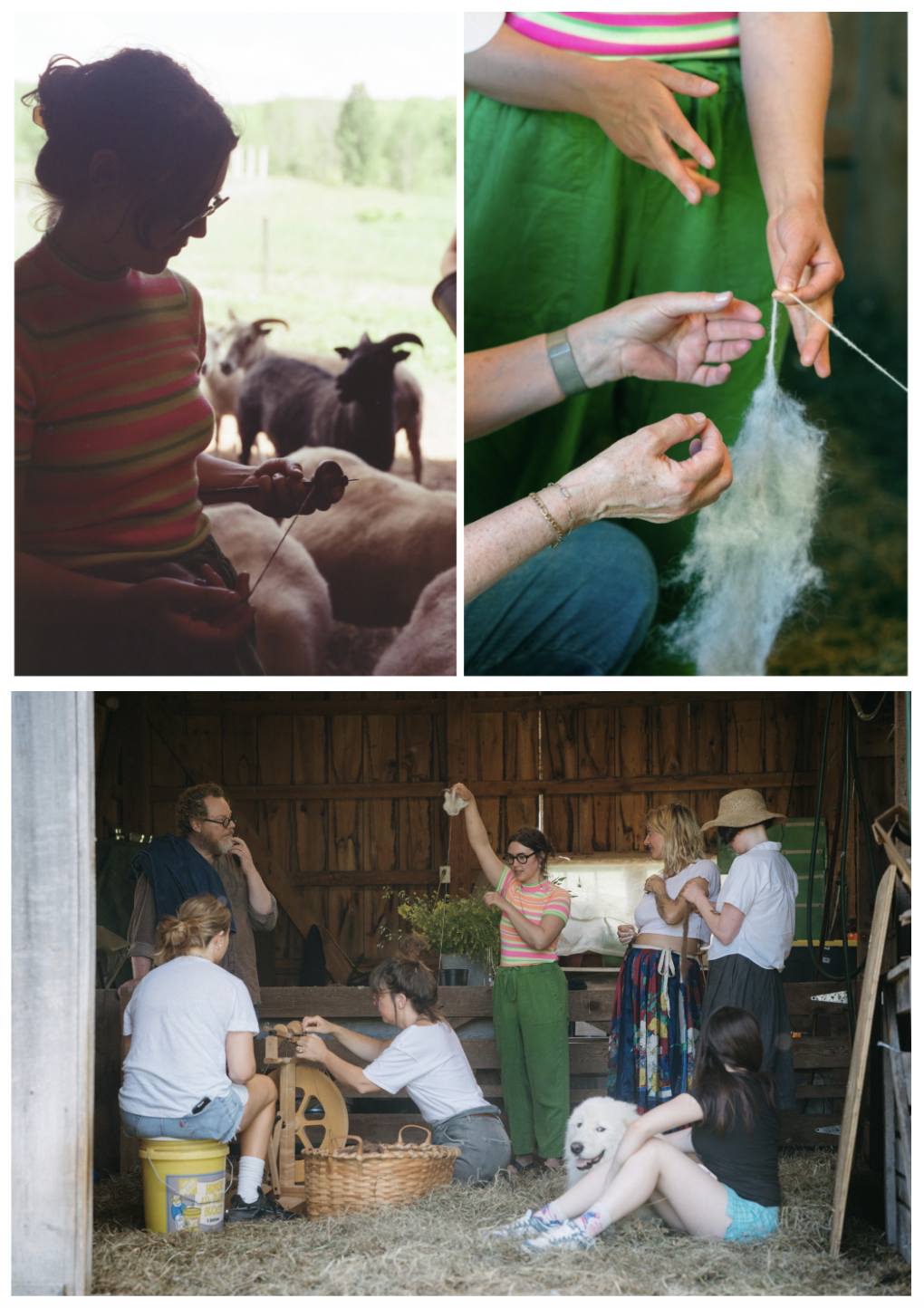
Photo by Harper Pictures
PETTY: What type of environment is the most helpful to you when creating? Loud and full of people, or quiet and alone?
KRIS: I love socializing in the studio, but the times I am most productive and connected to my process are when I am alone. I make a lot of work at home, actually. I began making pottery in a communal studio, though after I had a wonderful experience of being an artist in residence at a farm I lived on, I got quite used to having my own space. The studio was in an old barn and it had no heat or doors, and it was kind of open to the elements, but it overlooked a garden and a pond. People were always coming through, which made it endlessly interesting, and ultimately I could make my own messes and clean them up on my own time. It was such a nurturing place for a studio practice at that time in my life. It has been hard to go back to a communal studio since. I think it can work for certain projects, but I do my best work when I am quietly working by myself or with one or two other people who are focused on a task.
The exception to this is at a weaving studio in Vermont that I have been going to for the last year for special projects. It’s a wonderful, warm place with people working on all kinds of fiber related projects on 18th century barn looms. I love the sounds that these looms and shuttles make. I think weavers tend to be focused and studious in their work, so it feels easy to share time and space with them that way. It is so exciting when someone finishes a project and everyone gathers around to ‘ooh’ and ‘ahhh’ at the finished pieces getting pulled off the loom, and then goes back to quiet work. There’s also this really lovely element of sharing meals together outside of the studio time, which I think is an equally important part of having a studio practice.
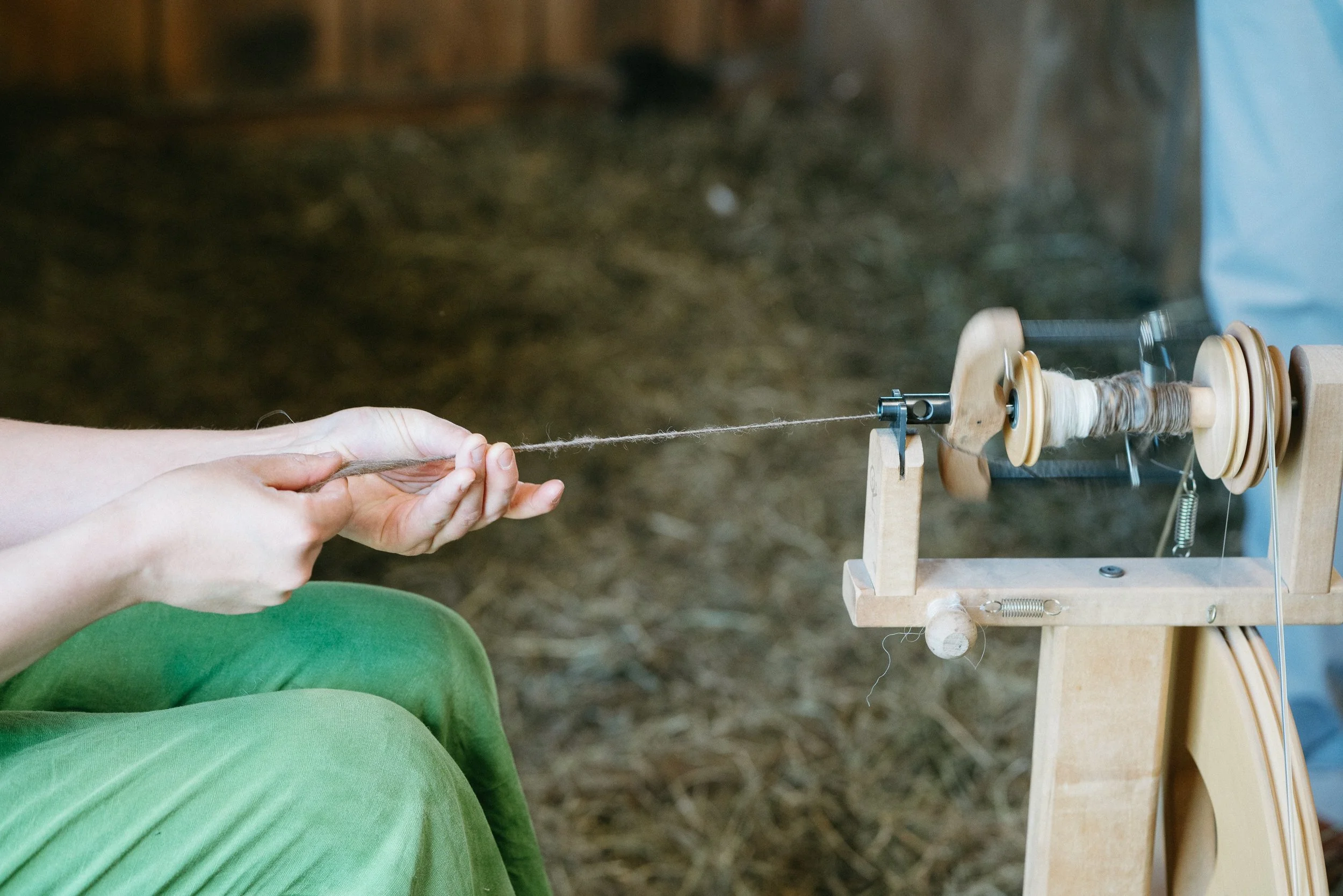
Photo by Harper Pictures
PETTY: What advice would you give someone just getting into ceramics?
KRIS: I have so much advice! My advice will sound kind of old fashioned but I truly believe in this: I would advise someone just getting into ceramics, or any art form for that matter, to delete social media for (at least!) three months, and to go to the studio as much as you can. Make a studio at home if you don’t have one to go to. Go slowly. Go to exhibitions and places that show ceramics, take notes, meet people who are also making things with clay that you admire, and read what you can from books at the library. I would say to try as many forms and equipment as you can, ask around on forums, have a kiln share or take workshops if possible. Play around and learn about the material before monetizing it or comparing your process to others. Take care of your body- take breaks, stretch, and have good studio habits of cleaning up. Learn about the clay that can be found in your region, and the work that has been made in your region with that clay. Learn the practice of letting things go when they are not working, and don’t fire something in the kiln that you feel ambivalent about, because its very unlikely you will change your mind about it when it comes out of the firing as a permanent thing, unless you treat it as an experiment. (Then ironically it often becomes a favorite!) What makes ceramics so interesting as a subject is that people have been making things out of clay for a very very very long time. There is an amazing history behind the material, and that history touches all of civilization and geological time. By making with clay you are engaging with that lineage. So cool! Have fun!
Photo by Warm Flowers
PETTY: Where do you hope to see you and your art in a few years? What are your artistic goals for the future?
KRIS: I would love to work with museums and educational spaces, and collaborate with people of various professional backgrounds, to work on larger scale multidisciplinary projects with elements that take years to come to fruition. I don’t know what that looks like yet, but I think I am moving towards it. I would like to travel to places with living and ancient textile and ceramic traditions, and make projects while I am there. And one day soon, I’d like to have a home where at least one room is entirely made out of ceramic elements, and another room entirely of woven textiles. Making a home is the ultimate dream artwork of my life. In the meantime I will keep teaching, making, gathering, spinning, painting and pinching.